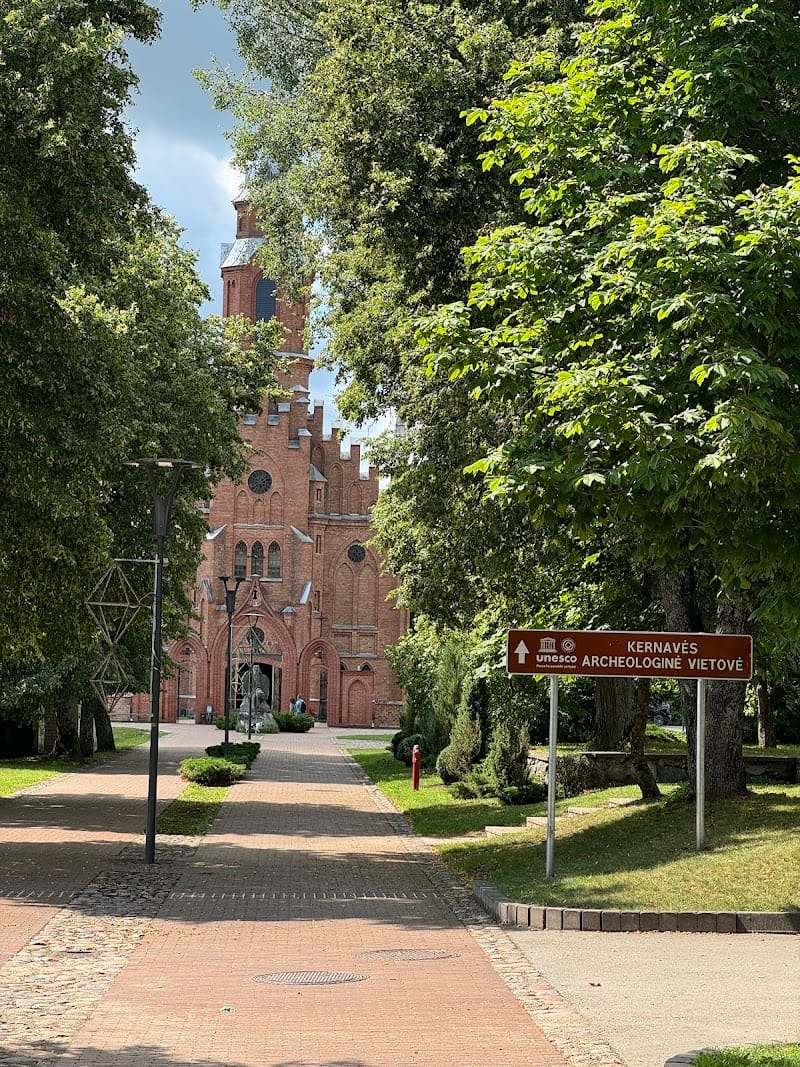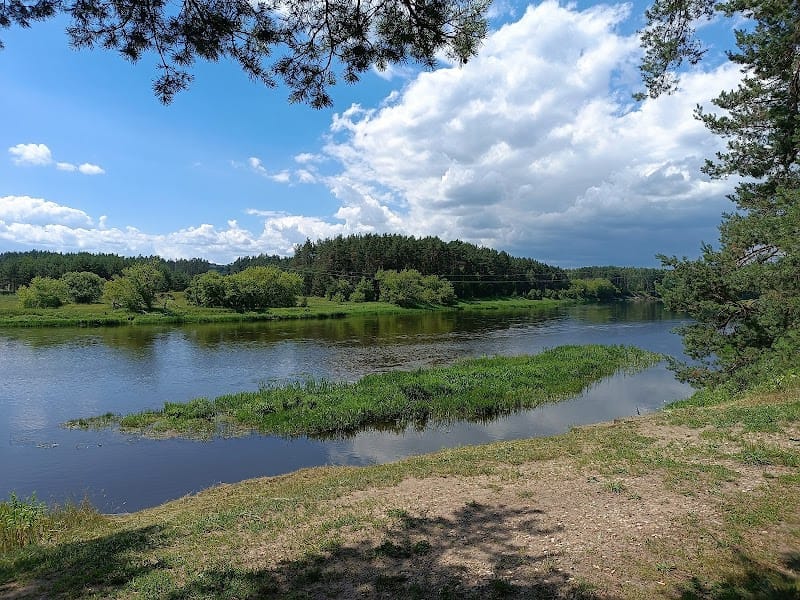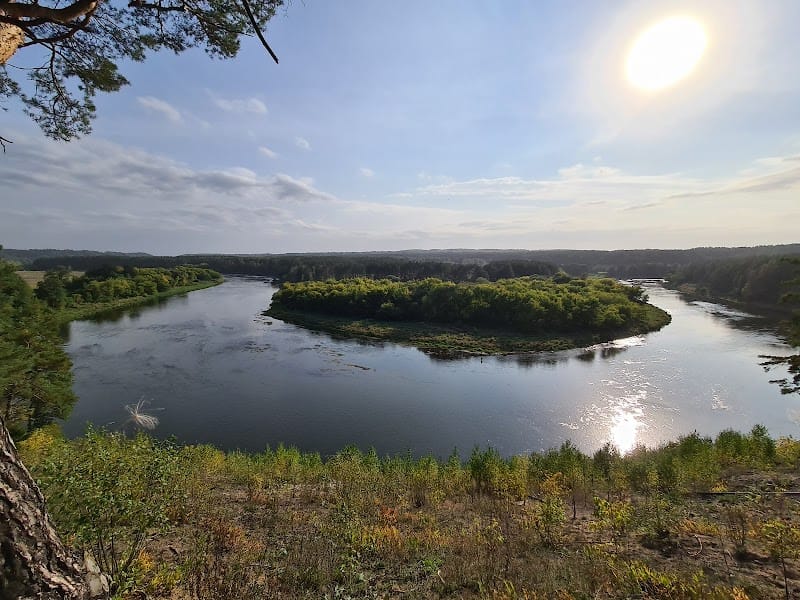
Kernave · Lithuania
White mountain viewpoint
📍 19172 Kernavė, Lithuania
Photos



The swastika is a symbol that has been used in many cultures and religions of Eurasia, as well as a few in Africa and the Americas, for thousands of years. The swastika was and continues to be used as a symbol of divinity and spirituality in several religions, including Hinduism, Buddhism, and Jainism. In the Western world, however, it is predominantly associated with the Nazi Party, which appropriated and widely displayed it on the flag of Germany and in other official capacities. This appropriation continues with the symbol's popularity among neo-Nazis around the world. The English word swastika is originally of the Sanskrit language (स्वस्तिक, lit. 'conducive to well-being'). In Hinduism, the right-facing symbol is called swastika, symbolizing surya, prosperity, and good luck; while the left-facing symbol is sometimes called sauvastika, symbolising night or tantric aspects of Kali. In Jain symbolism, it is a part of the Jain flag, and represents Suparshvanatha—the seventh of 24 Tirthankaras (spiritual teachers and saviours). In Buddhist symbolism, it represents the auspicious footprints of the Buddha. In different Indo-European traditions, the swastika symbolises fire, lightning bolts, and the Sun. The symbol is found in the archaeological remains of the Indus Valley Civilization and the Neolithic-era Samarra culture of Mesopotamia, as well as in early Byzantine and Christian artwork. The swastika was seen as a symbol of auspiciousness and good luck for most of the Western world until the 1930s. It was first used as a symbol of international antisemitism by far-right Romanian politician A. C. Cuza prior to World War I, but this did not change public perceptions about the symbol until the German Nazi Party adopted the swastika as an emblem of the so-called Aryan race.
- 1 In different Indo-European traditions, the swastika symbolises fire, lightning bolts, and the Sun.
Comments
No comments yet — be the first to share your visit (in the app).
Want to leave a review? Comments are written from inside the app — download Baltic Traveler to share your visit.