Sigulda · Latvia
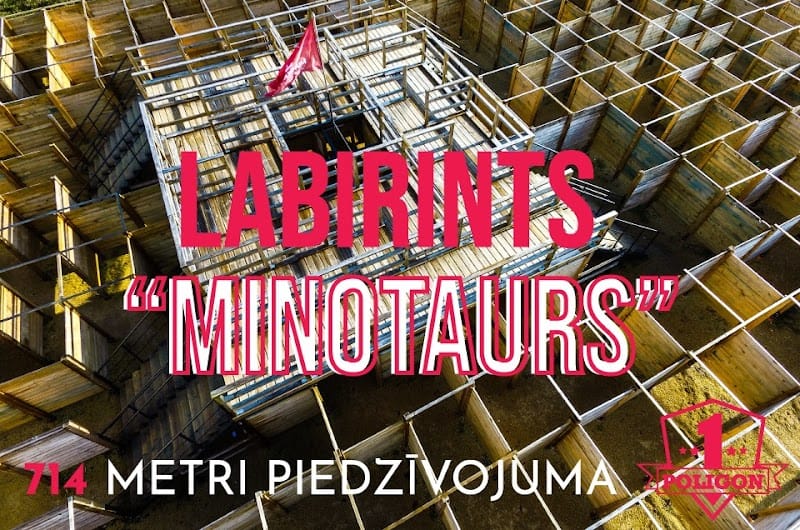
Minotaur - Labyrinth
📍 Miera iela 15, Sigulda, Siguldas pilsēta, Siguldas novads, LV-2150, Latvia
In Greek mythology, the Labyrinth is an elaborate, confusing structure designed and built by the mythological artificer Daedalus for King Minos of C...
Located at Miera iela 15, Sigulda, Siguldas pilsēta, Siguldas novads, LV-2150, Latvia.
Rating: 4.6/5 (271 reviews)
Website: https://www.poligon-1.lv/lv/page/labirints
Photos
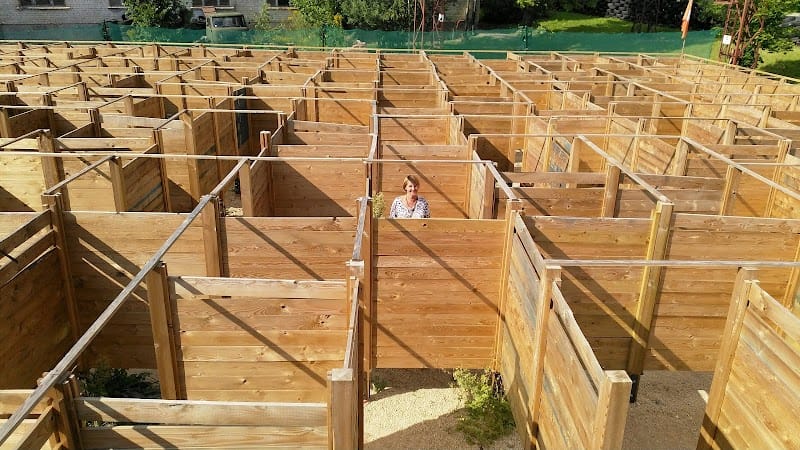
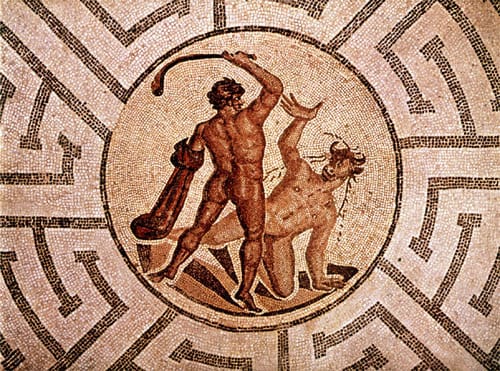
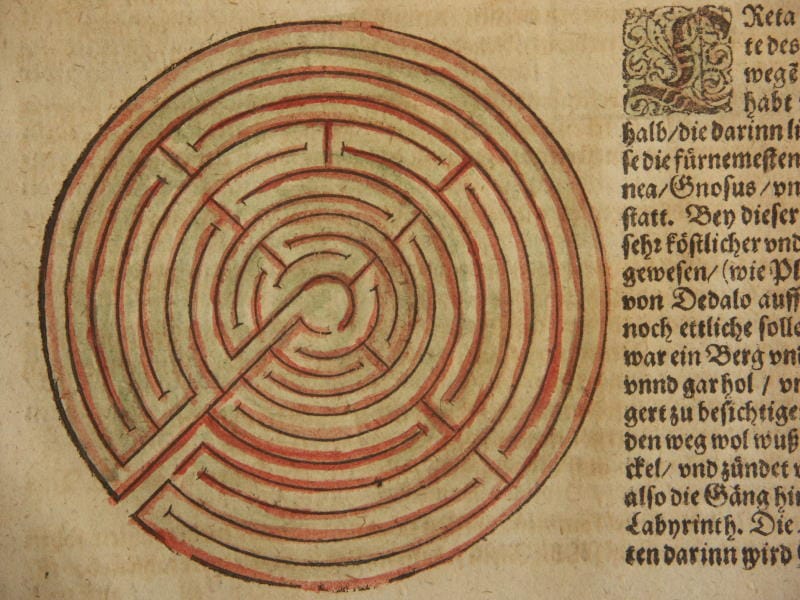
In Greek mythology, the Labyrinth is an elaborate, confusing structure designed and built by the mythological artificer Daedalus for King Minos of Crete at Knossos. Its function was to hold the Minotaur, the monster eventually killed by the hero Theseus. Daedalus had so cunningly made the Labyrinth that he could barely escape it after he built it. Although early Cretan coins occasionally exhibit branching (multicursal) patterns, the single-path (unicursal) seven-course "Classical" design without branching or dead ends became associated with the Labyrinth on coins as early as 430 BC, and similar non-branching patterns became widely used as visual representations of the Labyrinth – even though both logic and literary descriptions make it clear that the Minotaur was trapped in a complex branching maze. Even as the designs became more elaborate, visual depictions of the mythological Labyrinth from the Roman era until the Renaissance are almost invariably unicursal. Branching mazes were reintroduced only when hedge mazes became popular during the Renaissance. In English, the term labyrinth is generally synonymous with maze. As a result of the long history of unicursal representation of the mythological Labyrinth, however, many contemporary scholars and enthusiasts observe a distinction between the two. In this specialized usage, maze refers to a complex branching multicursal puzzle with choices of path and direction, while a unicursal labyrinth has only a single path to the center. A labyrinth in this sense has an unambiguous route to the center and back and presents no navigational challenge. Unicursal labyrinths appeared as designs on pottery or basketry, as body art, and in etchings on walls of caves or churches. The Romans created many primarily decorative unicursal designs on walls and floors in tile or mosaic. Many labyrinths set in floors or on the ground are large enough that the path can be walked.
- 1 He dwelt at the center of the Labyrinth, which was an elaborate maze-like construction designed by the architect Daedalus and his son Icarus, upon command of King Minos of Crete.
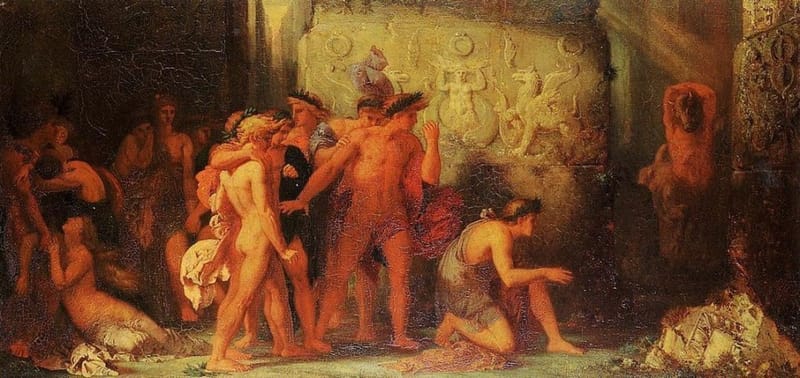
- 2 According to tradition, every nine years the people of Athens were compelled by King Minos to choose fourteen young noble citizens (seven men and seven women) to be offered as sacrificial victims to the Minotaur in retribution for the death of Minos's son Androgeus.
Comments
No comments yet — be the first to share your visit (in the app).
Want to leave a review? Comments are written from inside the app — download Baltic Traveler to share your visit.